


WIL LOFY’S BIOGRAPHY
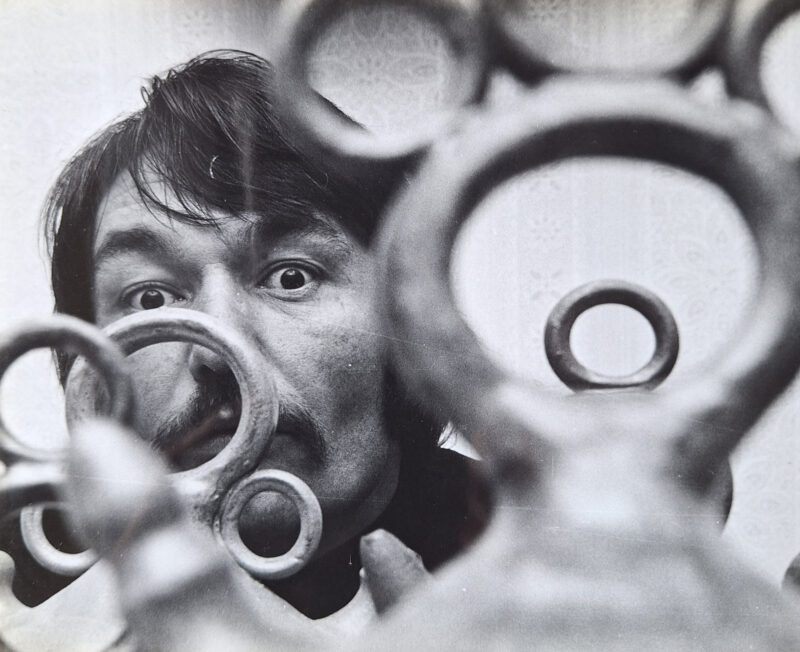
Wil was more than a sculptor and painter: he was a sailor, traveler, and storyteller whose art brought together folklore, humour, and a deep belief that creativity should serve people.
His works, scattered across Luxembourg and far beyond, remain inseparable from the places and communities that inspired them. From Italy to France, from Egypt to the Caribbean, from Morocco to South America, Wil Lofy lived and created.
Art in the public sphere
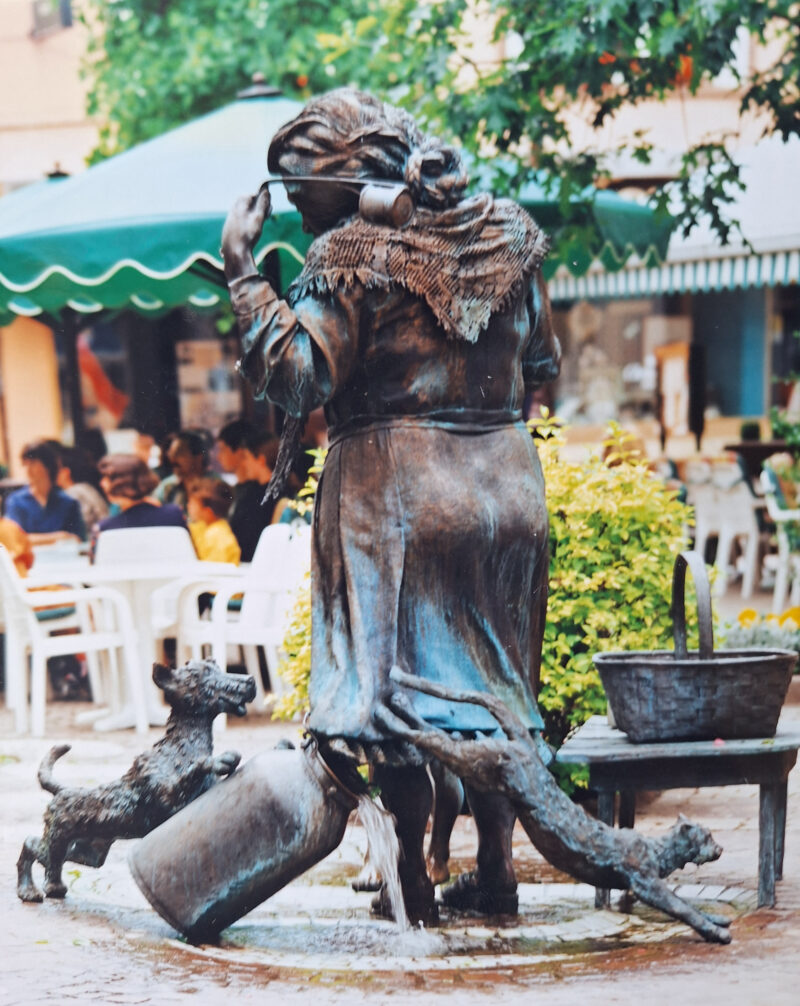
Few artists left such a visible mark on Luxembourg’s public spaces. Lofy’s probably most famous creation, the Hämmelsmarsch fountain (1982) at the Roude Pëtz in Luxembourg City, transformed a folkloric march into bronze. Produced in Pietrasanta, Italy, over 12 months, it is both playful and monumental—a celebration of tradition, music and the city’s Schueberfouer.
Equally beloved monuments followed: the Botterfra (1987) in Ettelbrück, commemorating the town’s butter market; the Maus Kätti fountains in Mondorf-les-Bains (1986) and Burmerange (1993) honoring Auguste Liesch’s legendary field mouse; and the Blannen Theis (1991) in Grevenmacher, a tribute to the blind wandering singer Mathias Schou. Each work tied local stories to enduring forms, often with a touch of irony that earned him the reputation of Luxembourg’s “enfant terrible”.
The most ambitious of Lofy’s public works was the Bacchus Fountain in Remich inaugurated in 1999. Standing 3.6 meters tall on the town’s esplanade, it celebrates the Moselle’s winemaking heritage. With Bacchus presiding in bronze, the sculpture underlines the festive, convivial spirit of the region while anchoring art firmly in the everyday lives of its people.
His public commissions extended beyond monuments. Lofy created interior decorations for Luxembourg’s city millennium celebration, façades, ceramic murals, and playful furniture for children. For him, “public sculptures are financed with public money, so my goal is to bring the people something enjoyable.”
Chile: a second home
If Luxembourg gave Lofy his public stage, Chile gave him material, myths, and a second life. Arriving there in 1985 on a self-built sailing boat with his friend Lucien Burcquier, he set up an atelier in Cauquenes to design wooden furniture for clients such as Galeries Lafayette. The project was as much a development aid as it was art, creating jobs and training opportunities.
Later, in Patagonia, he collected exotic woods washed ashore—remnants of a local legend in which spirits were turned into trees and thrown into the sea. These became the fantastical series Gestrandete Geister (“Stranded Spirits”), exhibited in Luxembourg in 1996. He also crafted monumental bathtubs and furniture from Andean cedar, works he described as both sensual and eternal.
A playful, restless spirit
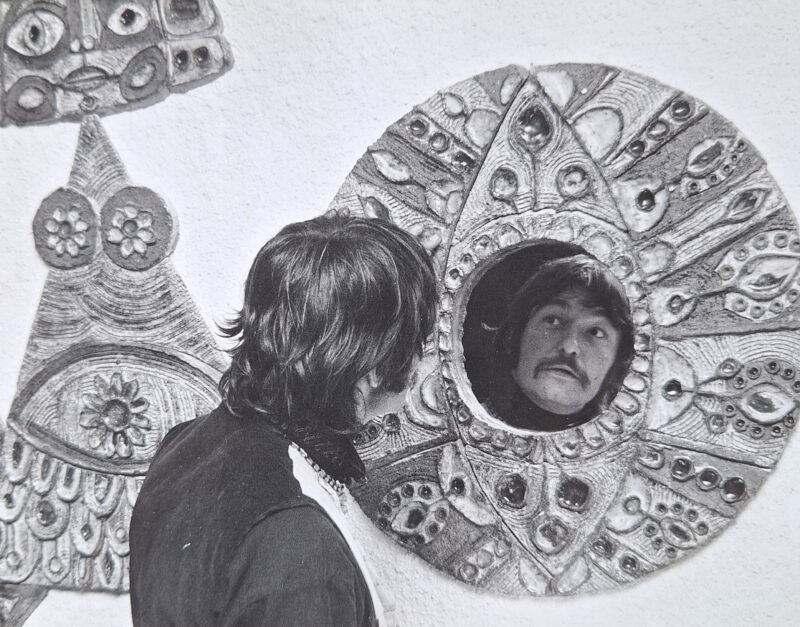
Lofy never confined himself to one medium. His Pëckvillercher (ceramic bird-whistles) gained both popularity and controversy, sparking a legal dispute over their originality. He produced prints of the Grund in Luxembourg City, donated proceeds to children’s festivities, and denounced speculative real-estate projects in the area. He created Orient-inspired paintings exploring eroticism, made playground sculptures of whales and crocodiles, and even experimented with copper mirrors.
Wil Lofy’s art carried stories across borders. Humor and playfulness met craft and philosophy, and the result was a body of work that continues to surprise and delight.
“My art pieces are in a way my children,” he once said. “I am happy when they can lead their life and be accepted by people.” Today, those children live on—in fountains, streets, squares and homes—reminders of an artist who created his life as well as his artworks.
Whatever the form, he remained faithful to one principle: “First comes life, then art.”